All work Personal project · In development

TractionFI: one clear next step for money decisions.

Most personal-finance apps chart the past and leave the decision open. TractionFI turns a well-known personal-finance flowchart into one next step, worked out from a person's own numbers, with the reason shown.

1 next stepWorked out by the app, not left to the person
Plain wordsEvery step explains why it comes first
PublicIn development at tractionfi.com
RoleSolo. Design, build, ship.
StatusIn development at tractionfi.com
Year2026
SurfaceWeb app
Before and after

A flowchart, read by hand.

Before · The chart, by hand

US Personal Income Spending Flowchart

  1. Rent and bills covered?NoBudget, cut costs
  2. One month of expenses set aside?NoSave that first
  3. Employer matches 401(k) savings?YesTake the full match
  4. Any debt at 10% interest or more?YesPay it off
  5. Bigger savings, retirement, college…
The chart is a static image. Each person traces a route through it box by box, here ending at the starter savings. Opening steps shown, simplified.
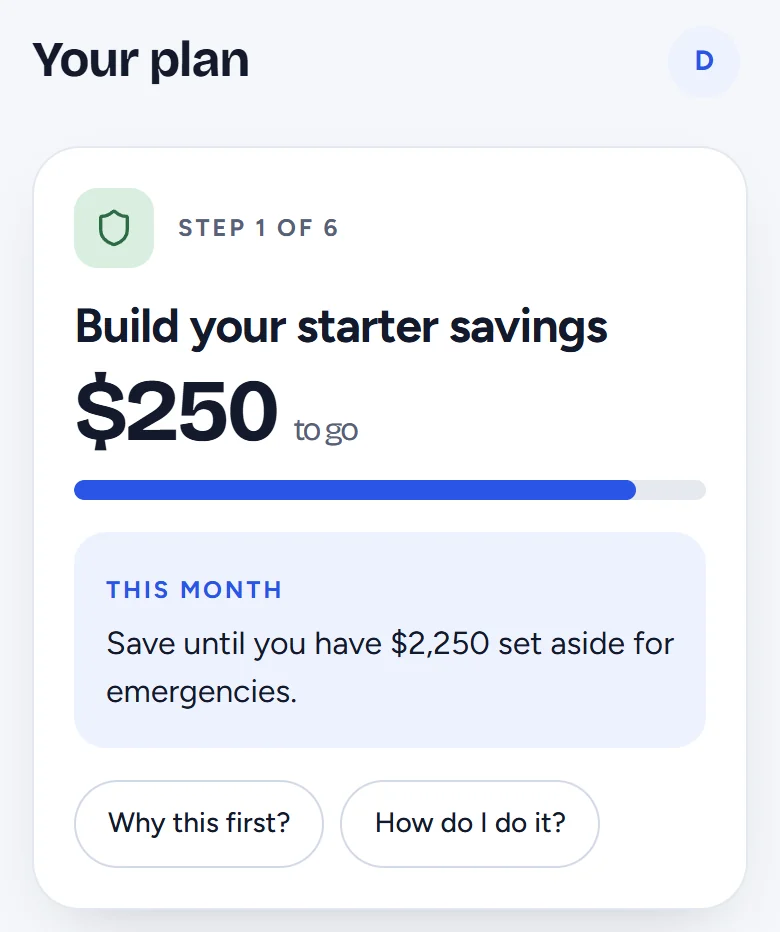
After · TractionFI TractionFI on a phone: Your plan, step 1 of 6, Build your starter savings, $250 to go, with buttons for Why this first and How do I do it.
TractionFI runs the same chart on that person's numbers and shows the one step that applies, with the reason a tap away.
The next step
Find a place on the chart Check each box Work out what comes next
One step, with the reason 3 → 1steps
A number changes
Trace the chart again
The plan updates on save 0retraces
What the app does

Four screens, one next step.

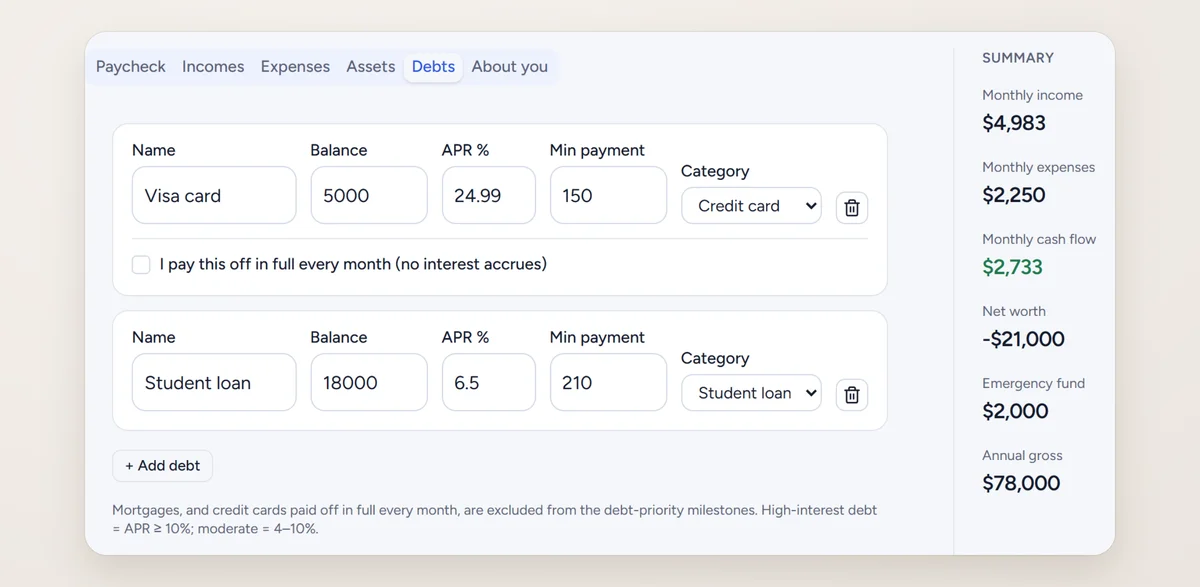
The My numbers screen on the Debts tab: a credit card and a student loan, with a summary of income, expenses, cash flow, and net worth.
01 · My numbers

The numbers go in once.

Six tabs, from paycheck to debts. Every change saves as it is typed.
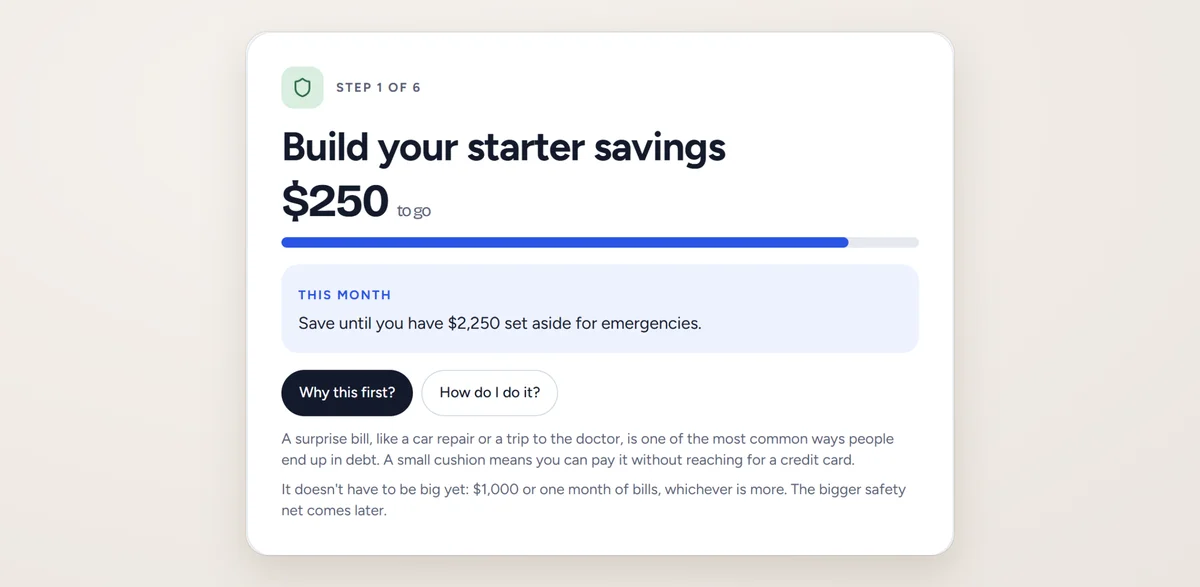
Step 1 of 6, Build your starter savings, $250 to go, with the Why this first explanation open.
02 · Next step

One step, and why it comes first.

Every answer explains itself in plain words, so the advice can be checked instead of taken on faith.
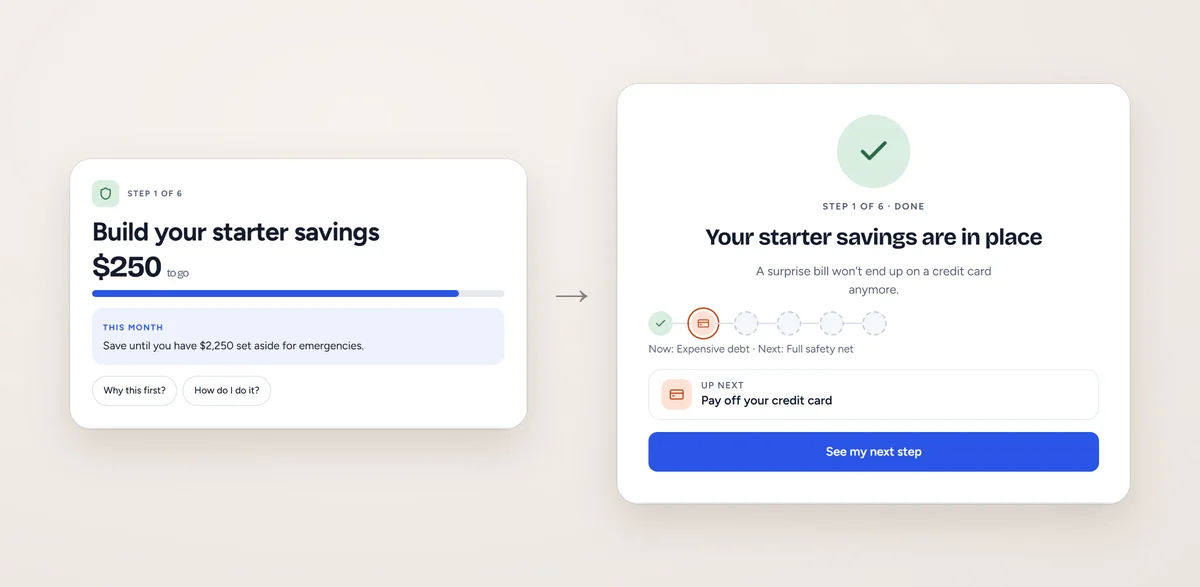
Before: starter savings with $250 to go. After: starter savings in place, with paying off the credit card up next.
03 · A change

Change a number, the plan moves.

Savings reach $2,500 and the starter step closes. Paying off the credit card is next.
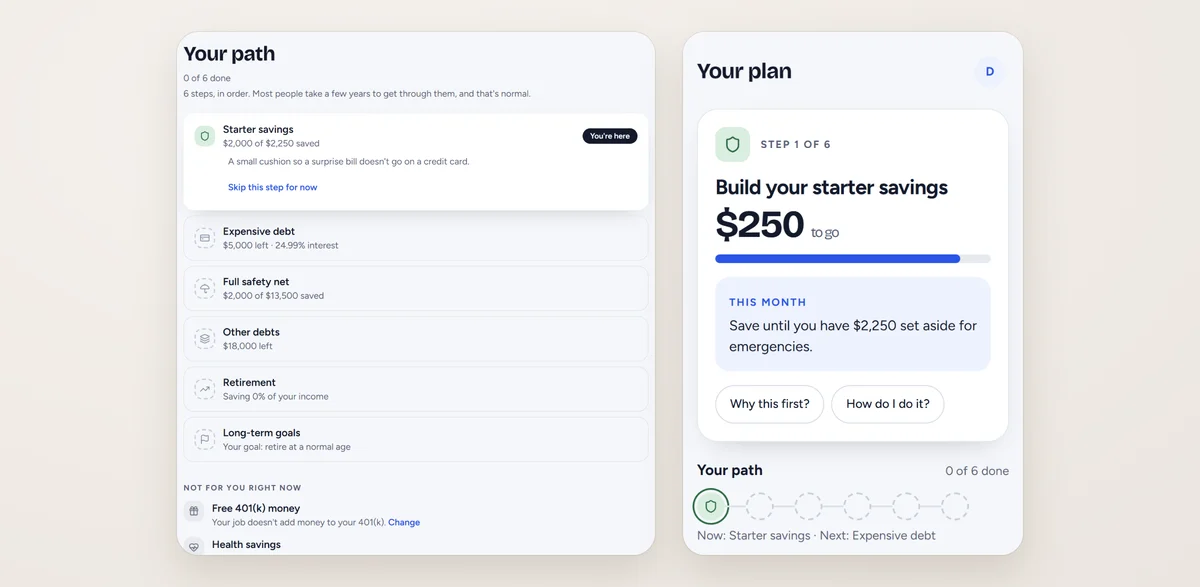
The six-step path on a laptop, and the plan with its path tracker on a phone.
04 · The path

Six steps in order, on any screen.

Steps that do not apply are set aside under Not for you right now.

Under the hood Stack and build

The decision engine is plain TypeScript with no framework and no database. The same numbers always return the same step.

The web app is Next.js on Vercel with Postgres. Built solo; public and iterating at tractionfi.com. Screens shown use demo numbers.

TypeScript Next.js React Postgres Vercel Vitest